
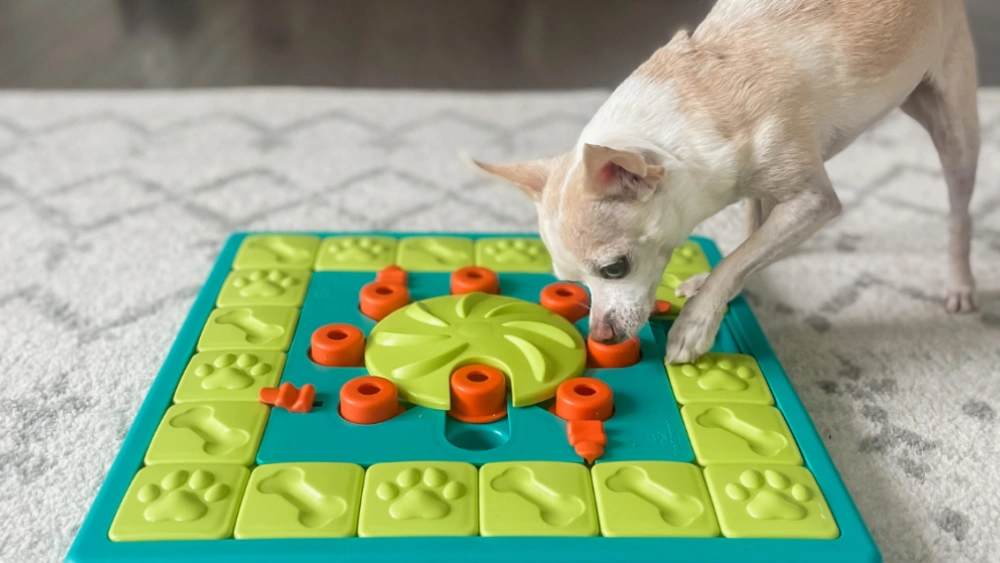
Are you looking to boost your dog’s mental sharpness while keeping them entertained? Puzzle toys for dogs might just be the answer you’ve been searching for.
These clever playthings challenge your furry friend’s brain, offering a fun and rewarding way to engage their natural instincts. But what exactly qualifies as a puzzle toy for your dog? And how can you choose the perfect one to keep your pet both happy and healthy?
By understanding the essentials of puzzle toys, you can transform playtime into an enriching experience that could positively impact your dog’s overall well-being. Stick around to discover how these intriguing toys can make a big difference in your pup’s life.

Credit: www.holistapet.com
Types Of Puzzle Toys
Puzzle toys come in various forms, each designed to challenge your dog’s mind in unique ways. Understanding the different types helps you choose the right toy that matches your dog’s personality and skill level. Let’s look at some popular categories that make playtime both fun and mentally stimulating.
Treat-dispensing Toys
Treat-dispensing toys reward your dog with snacks when they solve a puzzle. These toys often require your dog to push, roll, or twist parts to release a treat. I once saw my dog spend nearly 20 minutes figuring out how to get the last kibble out—keeping him entertained and focused.
These toys are great for slowing down fast eaters and providing mental exercise. You can find options like balls that release treats as they roll or puzzle boxes with compartments hiding the goodies. How might your dog react when treats come only after some effort?
Interactive Feeders
Interactive feeders make mealtime a brain workout. Instead of eating from a normal bowl, your dog has to navigate obstacles or solve puzzles to access their food. This keeps dogs engaged and prevents gulping, which can cause digestive problems.
Some feeders have maze-like patterns where the dog has to nudge food around barriers. Others require lifting flaps or sliding panels. These feeders are practical and mentally stimulating—perfect if your dog gets bored at mealtime.
Hide-and-seek Games
Hide-and-seek toys encourage your dog to use their nose and problem-solving skills. You hide treats or toys inside compartments or under covers, and your dog has to find them. This taps into their natural hunting instincts and keeps them mentally sharp.
Simple versions include plush toys with pockets, while advanced ones have multiple layers or sliding parts. Have you noticed how much your dog loves sniffing around when you hide a treat? These games turn that natural behavior into a rewarding challenge.

Credit: www.holistapet.com
Benefits Of Puzzle Toys
Puzzle toys offer more than just a fun distraction for your dog. They provide a range of benefits that enhance your pet’s well-being. Let’s look at how these toys can improve your dog’s mental sharpness, behavior, and physical health.
Mental Stimulation
Dogs need challenges to keep their minds sharp, and puzzle toys deliver just that. By figuring out how to access treats or solve problems, your dog exercises its brain. This kind of mental workout can reduce boredom, which often leads to destructive habits.
Have you noticed how your dog seems more alert after playing with a puzzle toy? That’s mental exercise at work. It’s a simple way to keep your dog’s cognitive skills in shape.
Behavioral Improvement
Puzzle toys can help manage common behavioral issues like chewing, barking, or anxiety. When your dog is focused on a puzzle, it’s less likely to engage in unwanted behavior. This distraction can promote calmness and patience.
One dog owner shared that her anxious pup stopped excessive barking after daily puzzle play. This shows how puzzle toys can be a practical tool for behavior management. Could this be the key to solving your dog’s restlessness?
Physical Exercise
Many puzzle toys encourage your dog to move, paw, or nudge the toy to get a reward. This gentle physical activity supports muscle tone and coordination. Even dogs with limited mobility can benefit from this kind of exercise.
Think about how your dog reacts to a food-dispensing puzzle toy—it often gets up and moves around, which adds to its daily activity. How could adding this to your dog’s routine improve its overall fitness?
Choosing The Right Puzzle Toy
Choosing the right puzzle toy for your dog is key to keeping them happy and engaged. A good puzzle toy challenges your dog’s mind and suits their physical needs. It must match your dog’s size, skill level, and chewing habits. This helps avoid frustration or damage. Safety should always be a top priority.
Size And Durability
Pick a toy that fits your dog’s size. Small toys can be a choking hazard for large dogs. Large toys might be hard for small dogs to handle. Check the toy’s material. Durable materials like hard rubber or thick plastic last longer. Avoid toys that break easily or have small parts.
Difficulty Level
Choose a puzzle that matches your dog’s skill. Beginners need simple puzzles with clear rewards. Experienced dogs need tougher challenges to stay interested. Change puzzles often to keep your dog curious. Gradually increase difficulty as your dog learns.
Safety Features
Look for toys without sharp edges or toxic materials. Non-toxic, BPA-free plastics are best. Avoid toys with small pieces that can be swallowed. Check for secure compartments to hold treats safely. Always supervise your dog during playtime to prevent accidents.
Top Interactive Puzzle Toys
Interactive puzzle toys keep dogs busy and sharp. These toys challenge dogs to solve problems to get treats or rewards. They help reduce boredom and improve mental skills. Puzzle toys come in many styles and difficulty levels. Here are some top interactive puzzle toys that suit different dogs and budgets.
Popular Brands
- Nina Ottosson: Known for durable and challenging puzzles.
- KONG: Offers treat-dispensing toys with various difficulty levels.
- Outward Hound: Features creative designs and multiple puzzle types.
- PetSafe: Provides toys that encourage problem-solving and reward.
Customer Favorites
- Nina Ottosson Dog Tornado: Spins to reveal hidden treats.
- KONG Classic: Can be stuffed with treats for chewing fun.
- Outward Hound Hide N Slide: Slides pieces to find snacks.
- PetSafe Busy Buddy Twist ‘n Treat: Adjustable difficulty to suit dogs.
Budget-friendly Options
- DIY muffin tin puzzles using tennis balls and treats.
- Simple treat-dispensing balls available at low prices.
- Basic sliding puzzles made from plastic or wood.
- Affordable snuffle mats that encourage sniffing and foraging.

Credit: www.holistapet.com
Frequently Asked Questions
What Defines A Puzzle Toy For A Dog?
A puzzle toy challenges a dog’s problem-solving skills. It usually hides treats or kibble inside. Dogs must figure out how to access the reward. These toys stimulate mental activity and reduce boredom.
How Do Puzzle Toys Benefit Dogs?
Puzzle toys improve a dog’s cognitive abilities and focus. They help reduce anxiety and destructive behavior. These toys encourage slow eating, promoting better digestion. Overall, they provide both mental and physical enrichment.
What Types Of Puzzle Toys Exist For Dogs?
Common types include treat-dispensing balls, interactive boards, and hide-and-seek puzzles. Some require sliding pieces or lifting flaps. Others involve pulling levers or spinning compartments. Each type offers different levels of difficulty.
Are Puzzle Toys Safe For All Dog Breeds?
Most puzzle toys are safe for all breeds but check durability first. Choose toys sized appropriately to prevent choking hazards. Supervise your dog initially to ensure safe interaction. Avoid toys with small or easily detachable parts.
Conclusion
Puzzle toys keep dogs busy and happy. They help dogs think and solve problems. Dogs enjoy the challenge and feel rewarded. These toys also reduce boredom and stress. Choose a toy that fits your dog’s size and skill. Change toys often to keep your dog interested.
Watch your dog play to ensure safety. Puzzle toys make playtime fun and smart. Try different types to find what your dog loves. A happy dog is a healthy dog.