

Are you struggling to memorize the periodic table of elements? You’re not alone.
Many people find it daunting to remember all those elements and their symbols. But what if I told you there’s a way to make it easier and maybe even fun? Imagine having the periodic table at your fingertips, ready to impress in science class or help you score high on that upcoming test.
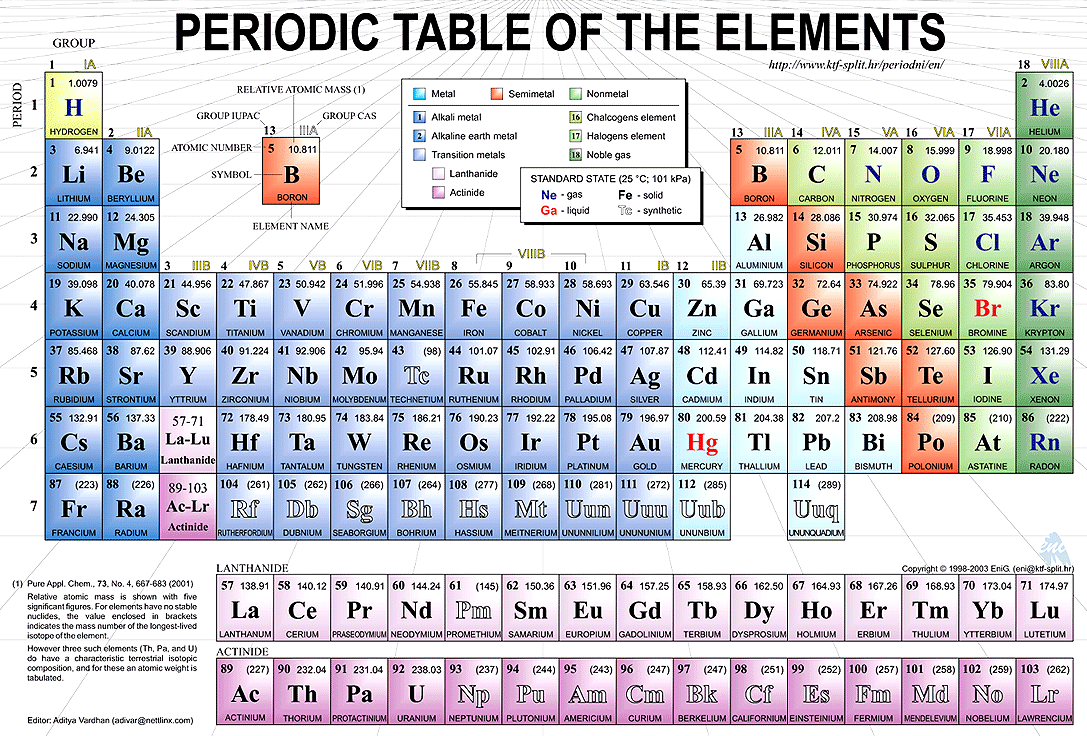
In this guide, you’ll discover simple tricks and techniques to help you learn the periodic table effectively. We’ll break it down into manageable steps and show you how to use your brain’s natural abilities to make learning stick. Ready to make chemistry your new favorite subject? Let’s dive in and unlock the secrets of the periodic table together!
Credit: owlcation.com
Interactive Learning Tools
Learning the periodic table doesn’t have to be a daunting task. Interactive learning tools can transform this process into an engaging and enjoyable experience. These tools cater to different learning styles, whether you prefer visual aids, games, or hands-on activities.
Interactive Periodic Table Apps
There are numerous apps designed to make learning the periodic table fun. Apps like “Periodic Table Quiz” allow you to test your knowledge with interactive quizzes. They provide instant feedback, helping you identify areas for improvement. You can track your progress and set goals for mastering each element.
Online Games And Quizzes
Online games offer a playful approach to memorizing elements. Platforms like Sporcle have timed quizzes that challenge you to name elements within a set period. It’s like turning learning into a competitive sport! Can you beat your personal best while absorbing crucial scientific knowledge?
Virtual Labs
Virtual labs provide a simulated environment to experiment with chemical reactions. They allow you to see how elements interact without the need for physical materials. This hands-on experience can deepen your understanding and spark curiosity about the real-world applications of chemistry.
Video Tutorials
Platforms like YouTube offer countless video tutorials that break down the periodic table into digestible parts. Watching engaging presentations can help solidify your understanding. Visual learners might find this method particularly effective. Have you ever tried learning a new concept through an animated video?
Collaborative Learning Platforms
Websites like Khan Academy provide structured courses that encourage interactive learning. They often include discussion forums where you can ask questions and share insights with other learners. This collaborative environment fosters a community spirit, making you feel supported on your learning journey.
Element Flashcards
Flashcards remain a classic tool for memorization. Digital flashcard apps like Quizlet offer pre-made decks focusing on the periodic table. You can customize your own set to include specific information like atomic numbers or element symbols. How fast can you recall the properties of each element?
Mnemonic Devices And Memory Aids
Learning the periodic table becomes easier with mnemonic devices. Create catchy phrases using element symbols to recall groups. Visual aids like colored charts also boost memory retention.
Learning the periodic table can seem daunting. Mnemonic devices and memory aids make it easier. These tools use simple patterns or phrases to help remember complex information. By creating associations, they help in recalling elements with ease. Mnemonics can turn a list of elements into a memorable story or sentence.Why Mnemonics Work For Learning
Mnemonics simplify information. They use familiar words to encode unfamiliar data. This helps our brain store and retrieve information more efficiently. They act like mental shortcuts, making recall faster.Creating Your Own Mnemonic Devices
Personalized mnemonics are powerful. Use initials of elements to form a catchy phrase. For example, “Harry He Likes Beer But Could Not Offer Food” for Hydrogen, Helium, Lithium, Beryllium, Boron, Carbon, Nitrogen, Oxygen, and Fluorine.Popular Mnemonic Examples For The Periodic Table
Some mnemonics are widely used. For the first ten elements, try: “Happy Henry Likes Beer But Can Not Obtain Food Now.” This helps remember the sequence from Hydrogen to Neon.Memory Aids Beyond Mnemonics
Memory aids include songs, rhymes, and flashcards. Songs set to familiar tunes make elements more memorable. Rhymes work similarly, creating rhythm and pattern. Flashcards offer visual reinforcement, strengthening memory through repetition.Using Visual Aids For Better Recall
Visual aids enhance memory retention. Color-coded tables highlight groups of elements. Diagrams and symbols add visual interest. These tools engage the brain, aiding long-term retention.Incorporating Technology And Apps
Apps provide interactive learning experiences. They offer quizzes and games to reinforce learning. Many apps track progress, making learning engaging and fun.Practical Application And Daily Practice
Learning the periodic table requires daily practice with visual aids and mnemonics. Engage with interactive quizzes to enhance memory retention. Regularly revisiting and testing knowledge aids in long-term comprehension.
Learning the periodic table can seem daunting. Integrating practical applications and daily practice makes it easier. This method deepens understanding and aids memory retention. Applying knowledge in real-life situations fosters a greater connection to the elements. Regular practice reinforces learning, making recall quicker and more accurate.Practical Uses In Everyday Life
Discover how elements appear in daily life. Recognize them in household items. For instance, sodium is in table salt. Carbon is in pencils. This connection helps solidify knowledge.Incorporate Elements Into Routine Tasks
Use the periodic table during routine tasks. Label elements in kitchen ingredients. Identify elements in cleaning products. Make it a habit. This reinforces your learning without extra effort.Flashcards For Quick Review
Create flashcards with element names and symbols. Review them daily. Even a few minutes help. Keep them handy. Use them during spare moments. Consistent review strengthens memory.Online Quizzes And Apps
Use apps designed for learning the periodic table. They offer interactive quizzes. These tools are engaging. Apps provide immediate feedback. This aids in correcting mistakes promptly.Group Study Sessions
Join a study group. Discuss elements with peers. Sharing insights can clarify doubts. Group settings make learning enjoyable. It fosters a collaborative learning environment.Relate Elements To Current Events
Read news articles on scientific discoveries. Relate them to the periodic table. This contextual learning enhances comprehension. It shows the relevance of elements in real-world scenarios.
Credit: www.facebook.com

Credit: www.chemistrynotesinfo.com
Frequently Asked Questions
What Is The Easiest Way To Learn Periodic Table?
Use mnemonic devices to memorize groups and elements. Engage with interactive apps for visual learning. Regularly quiz yourself to reinforce memory. Create flashcards for quick revision. Study in short, consistent sessions to improve retention.
What Is The Easiest Way To Understand The Periodic Table?
Explore the periodic table by focusing on element groups and periods. Use color-coding to visualize trends easily. Learn key terms like atomic number and mass. Utilize interactive online tools for a hands-on understanding. Remember, practice and repetition make comprehension easier.
How Do I Memorize The First 20 Elements?
Use mnemonic devices to memorize the first 20 elements. Create a catchy phrase using the element symbols. Practice regularly and quiz yourself to reinforce memory. Visual aids, like flashcards, can also help enhance recall. Remember to group them into smaller sets for easier retention.
How To Memorize 1 To 30 Elements?
Use mnemonic devices to memorize elements 1 to 30. Create a catchy phrase or story linking element symbols. Practice regularly by writing them down or using flashcards. Visual aids like periodic tables with colors can help reinforce memory. Engage in quizzes to test and improve recall.
Conclusion
Mastering the periodic table takes time and effort. Start small. Learn a few elements each day. Use flashcards for quick memory boosts. Practice regularly to retain information. Engage with fun quizzes to test your knowledge. Visual aids like charts can also help.
Group elements by categories to simplify learning. Stay curious and motivated. Celebrate small wins to keep going. With patience, you will succeed. Understanding the periodic table opens new doors in science. Keep exploring. Keep learning. Your journey has only just begun.