
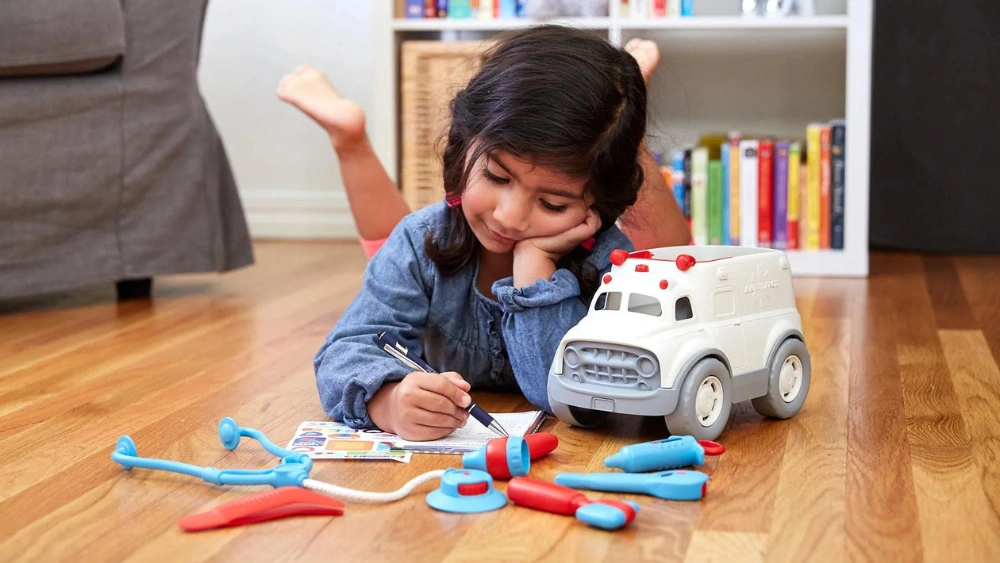
Imagine a world where your child’s creativity knows no bounds, where they can be an astronaut one day and a fearless explorer the next. Pretend play toys open that world for your 7-year-old, allowing them to step into roles and experiences beyond their everyday life.
But did you know that these toys do more than just entertain? They are powerful tools that aid in your child’s development, enhancing their cognitive abilities, social skills, and emotional growth. As a parent, you want the best for your child, and understanding the benefits of pretend play can provide you with a secret weapon in nurturing their growth.
This article will uncover why pretend play toys are not just a source of fun but a crucial part of your child’s development. By the end, you’ll be eager to stock up on these magical toys, fully aware of the significant role they play in shaping your child’s future. Keep reading to discover how pretend play can be the key to unlocking your child’s potential.
Cognitive Development
Pretend play toys foster cognitive growth in 7-year-olds by enhancing imagination and problem-solving skills. These toys encourage creative thinking and social interaction, crucial for brain development at this age. Kids learn empathy and communication while engaging in imaginative scenarios, aiding in their overall mental growth.
Cognitive development in children is a fascinating journey filled with curiosity and discovery. At the age of seven, children are like little explorers, constantly learning and figuring out the world around them. Pretend play toys can play a crucial role in enhancing their cognitive skills, making learning both fun and effective.Understanding Abstract Concepts
Pretend play toys allow children to step into roles and scenarios that aren’t part of their everyday reality. This helps them grasp abstract concepts and develop critical thinking skills. Imagine your child playing with a doctor’s kit; they’re not just having fun but also learning about empathy and problem-solving.Boosting Language Skills
When children engage in pretend play, they often create dialogues and stories. This practice can significantly boost their language skills. Have you ever listened to your child narrate an elaborate story involving their action figures or dolls? This storytelling boosts vocabulary and improves sentence structure.Enhancing Memory And Focus
Pretend play requires children to remember roles, rules, and sequences, enhancing their memory and focus. Consider a child playing a restaurant game; they remember customer orders, creating a mini-world that demands attention and organization. This kind of play develops their ability to concentrate and manage information.Problem Solving And Decision Making
Pretend play often involves scenarios where children need to solve problems or make decisions. Whether it’s figuring out how to build a fort with pillows or decide who takes on which role in a game, they’re learning to think critically. You might notice your child negotiating roles or rules with friends, honing their decision-making skills.Understanding Cause And Effect
Children learn about cause and effect through pretend play. If they build a tower and it falls, they understand why that happened and how to fix it. This kind of hands-on learning is powerful and sticks with them much longer than abstract explanations. Do you remember a time when you learned something new through play? Perhaps it was a board game or a puzzle. That same principle applies to children. Pretend play toys are more than just fun; they are tools that nurture a child’s growing mind. What kind of pretend play toys will you choose to support your child’s cognitive development?
Credit: www.walmart.com
Social Skills Enhancement
Pretend play toys are not just about fun. They play a vital role in developing social skills in 7-year-olds. Kids learn to interact, share, and cooperate with others. These skills are essential as they grow and engage with the world.
Understanding Cooperation
Pretend play toys teach children to work together. They share roles and tasks. This helps them understand the importance of cooperation. Kids learn to listen and respect others’ ideas. Teamwork becomes a natural skill.
Learning Communication
Through pretend play, kids practice speaking and listening. They create stories and dialogues. This boosts their vocabulary and language skills. They learn how to express thoughts clearly. Communication becomes a fun activity.
Developing Empathy
Playing with pretend toys, kids step into others’ shoes. They understand different emotions and perspectives. This fosters empathy and compassion. Children learn to care about others’ feelings. It helps them build strong relationships.
Building Confidence
Pretend play encourages kids to take on new roles. They become doctors, teachers, or superheroes. This builds self-confidence and self-esteem. Children feel capable and empowered. They learn to trust their abilities.
Practicing Problem-solving
Children face challenges during pretend play. They need to find solutions. This enhances their problem-solving skills. Kids learn to think critically and creatively. It prepares them for real-life situations.
Emotional Growth
Emotional growth in children is crucial for developing a well-rounded personality. Pretend play toys significantly contribute to the emotional development of 7-year-olds. Engaging in imaginative scenarios helps them understand emotions, social roles, and empathy.
Understanding Emotions
Pretend play allows children to express feelings in a safe environment. They learn to identify emotions like happiness, sadness, and anger through role-playing. This understanding helps them manage their emotions better in real life.
Building Empathy
Children develop empathy by imagining themselves in different roles. Pretend play teaches them to see things from other perspectives. This skill is crucial for forming strong interpersonal relationships.
Social Interaction
Playing with others enhances communication skills. Kids learn to negotiate and collaborate during pretend play. These interactions promote emotional intelligence and social confidence.
Problem Solving
Pretend play often involves creating scenarios that require problem-solving. Children learn to think critically and find solutions. This boosts their emotional resilience and adaptability.
Self-expression
Pretend play encourages self-expression without judgment. Kids can explore different identities and express themselves freely. This freedom fosters a strong sense of self-awareness and emotional maturity.

Credit: www.amazon.com

Credit: www.amazon.com
Frequently Asked Questions
Is 7 Too Old For Pretend Play?
No, 7 is not too old for pretend play. Pretend play enhances creativity, social skills, and problem-solving abilities. Many children enjoy it beyond this age, supporting emotional and cognitive development. Encourage imaginative activities to foster learning and growth.
What Are The Benefits Of Pretend Play For Children?
Pretend play boosts creativity and imagination in children. It enhances social skills and emotional development. Kids improve problem-solving abilities and language skills. This type of play encourages empathy and understanding of different perspectives. It supports cognitive growth and helps build confidence.
Should My 7 Year Old Still Play With Toys?
Yes, 7-year-olds should play with toys. They encourage creativity, learning, and social skills. Toys provide fun and educational experiences. Playing with toys supports emotional and cognitive development. Let your child enjoy toys to nurture their imagination and growth.
At What Age Should Kids Stop Playing Pretend?
Kids should stop playing pretend when they naturally outgrow it, usually around ages 10 to 12. Each child develops uniquely, and pretend play helps develop creativity and social skills. Encourage play as long as it benefits them.
Conclusion
Pretend play toys offer many benefits for 7-year-olds. These toys boost creativity. They help kids explore new roles and scenarios. Kids learn problem-solving through imaginative play. Social skills improve as children interact with others. Pretend play encourages communication and teamwork.
It also supports emotional development by expressing feelings. These toys are not just fun. They play a vital role in child growth. Parents can feel confident choosing them. They provide a valuable learning experience. Encourage your child’s imagination with pretend play toys.
Watch them grow and thrive every day.